
.svg)


End-to-End UX Ownership | Human-Centered Research | Collaborative Ideation | Workshop Facilitation| UX Strategy & Experimentation | Data-Driven Design | Prototyping in Code (Playroom Prototyping) | Information Architecture Redesign | Error State Optimization
Context
SEEK operates as an online job marketplace covering the entire Asia Pacific region.
Within its offerings, hirers can leverage the Talent Search feature to search, filter, compile, and reach out to potential new talent - a tool that facilitates headhunting and proactive sourcing.
For this project, I worked within a collaborative multi-disciplinary team with other Product Designers, Content Designers, Product Managers, Developers and Go-to-Market teams.
The challenge
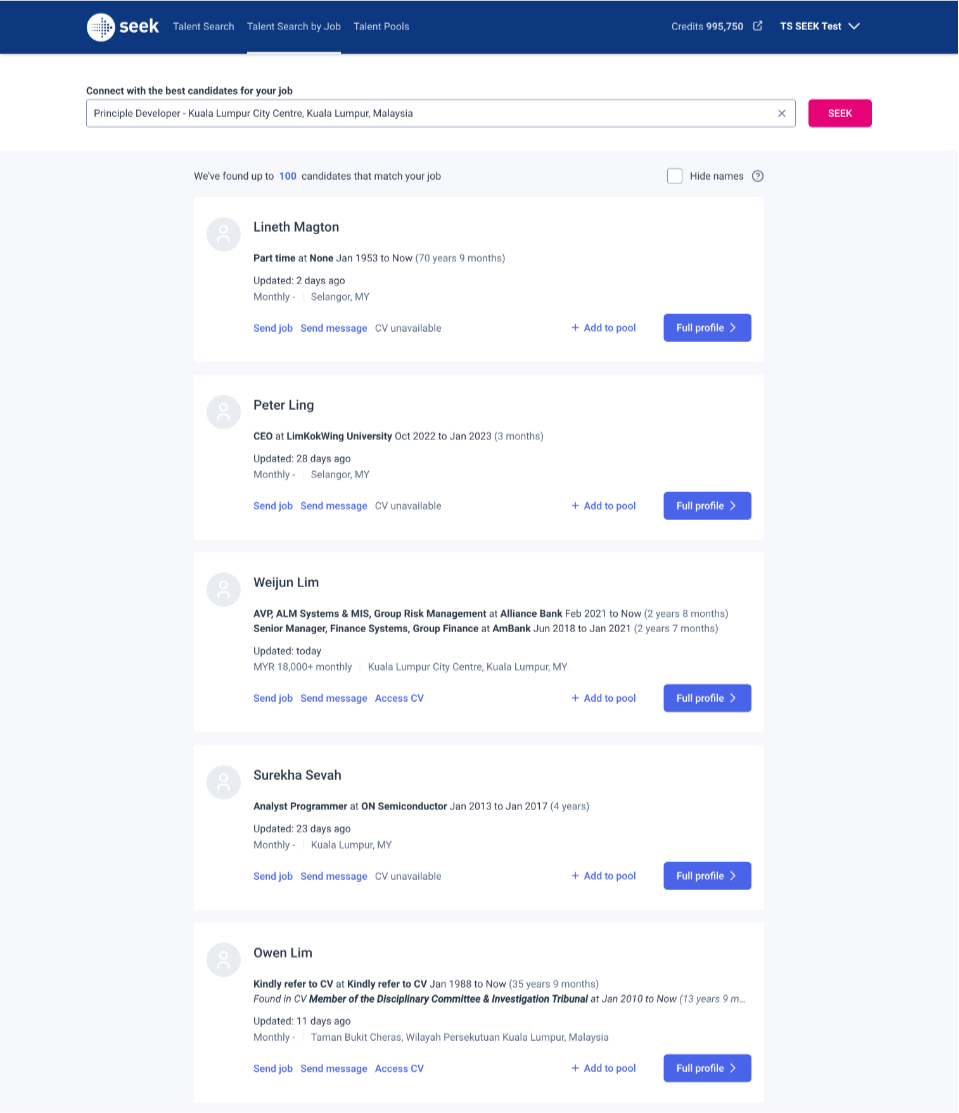
Within Talent Search, we had created an AI back end, a sophisticated algorithm operating behind the scenes. It aims to optimise results based on factors like the details of the posted job ad, and the skills and experience of the candidate.
For example - imagine you post an job ad for a Product Designer, with specific salary limit, define a location and write up a job description. The algorithm would pick out keywords from the description such as skills requied, years of experienc etc, and then search the database of candidates to find matches.
The team received substantial feedback on these optimised results, particularly regarding hirers' occasional lack of understanding regarding recommended candidates. For example, job ads with limited information or requirements get irrelevant candidates being recommended back.
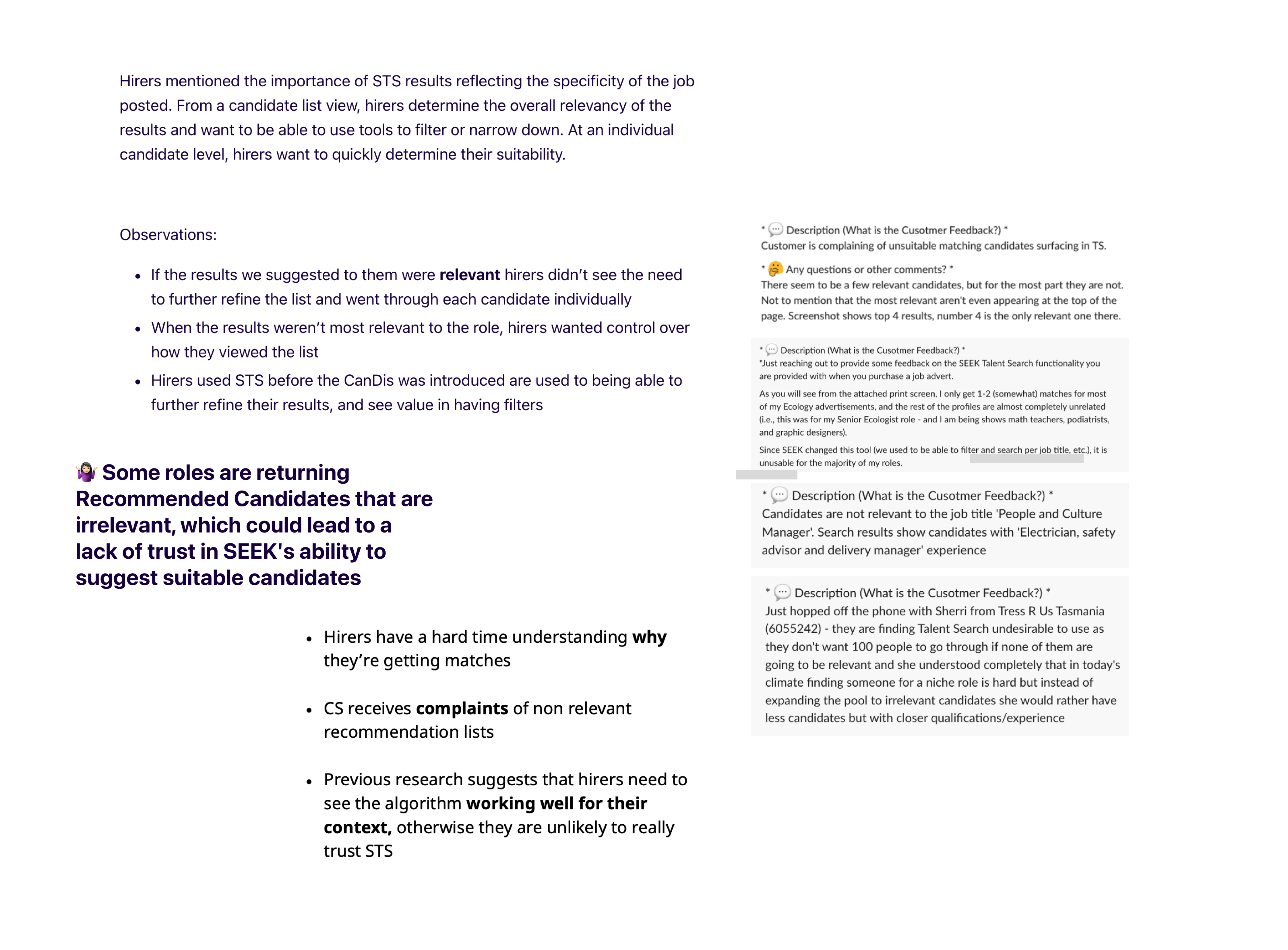
After reviewing past research and business priorities aimed at enhancing connections between hirers and candidates, we identified a significant opportunity: improving "explainability."
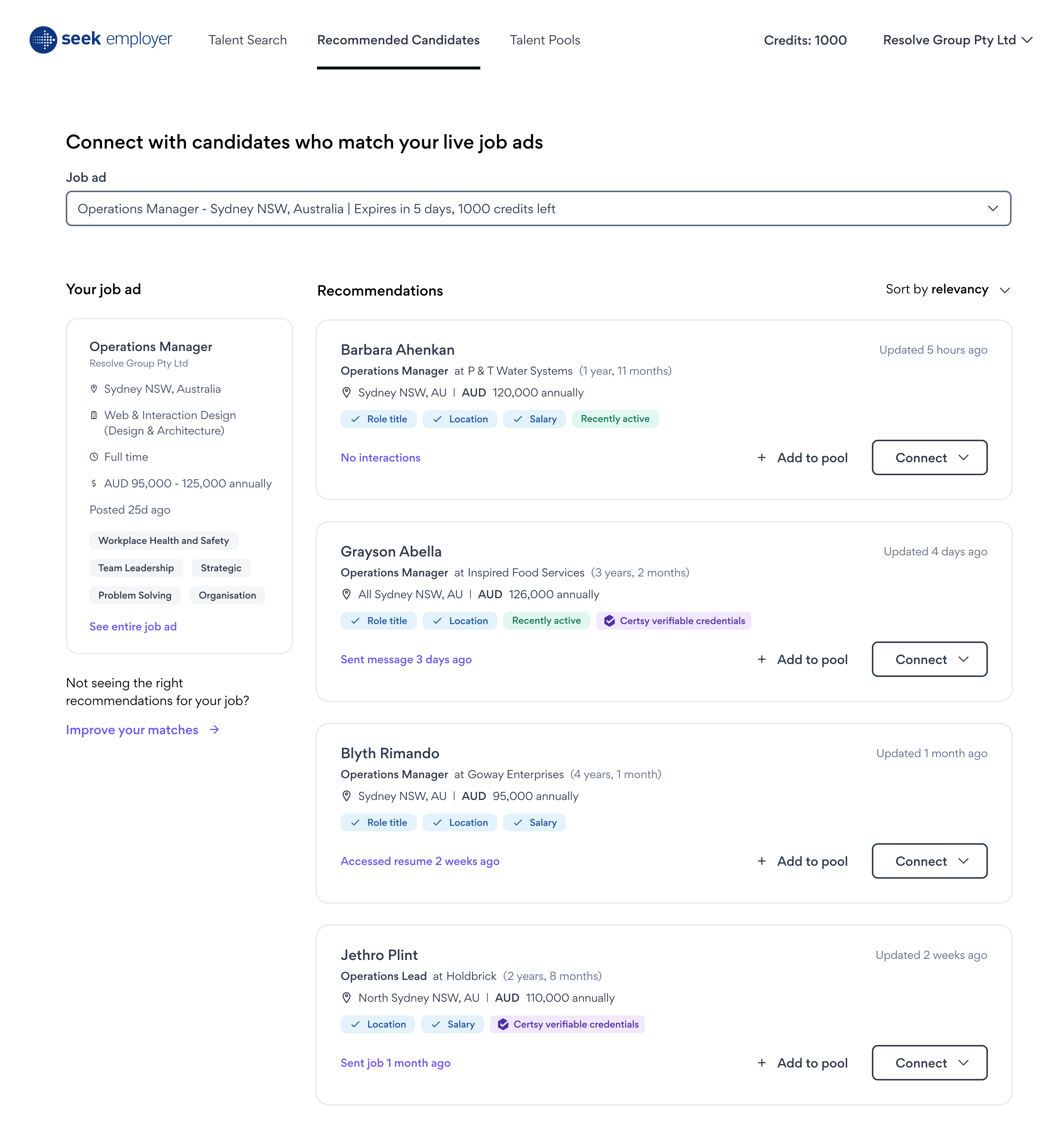
Our goal was to find ways to better clarify our results and assist hirers in understanding why specific candidates were being recommended and improving their recommendations.
The solution
I redesigned:
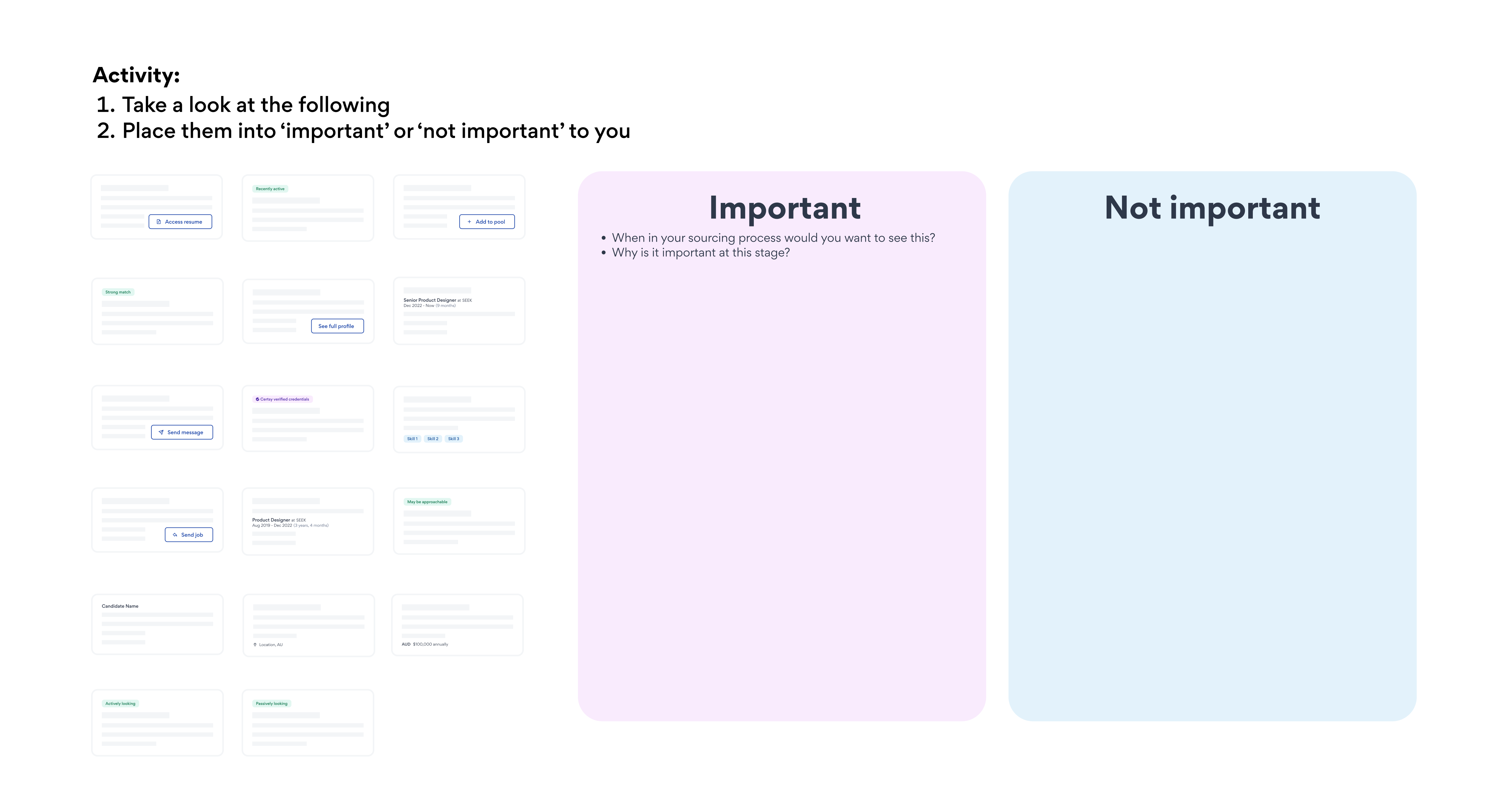
- The way candidate information is shown on cards through card sorting and testing the most important information for hirers
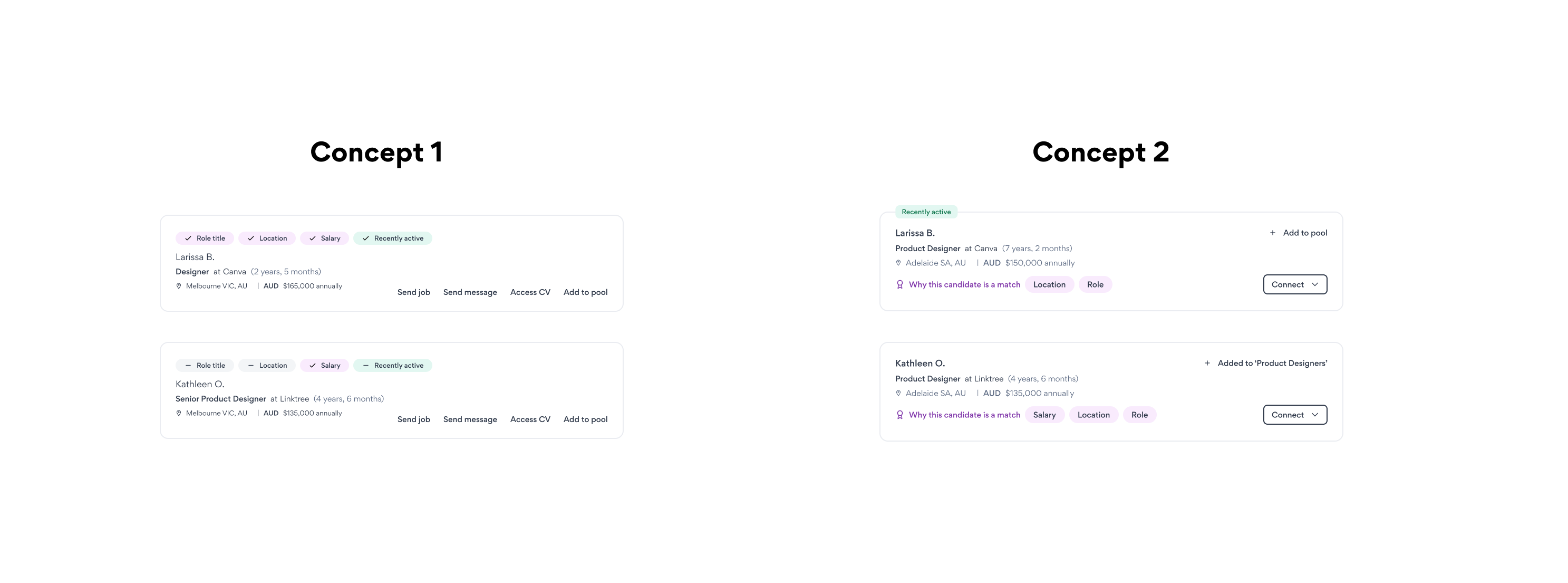
- The search results page, including a section about the job in order to make it clear how and why candidates are being recommended
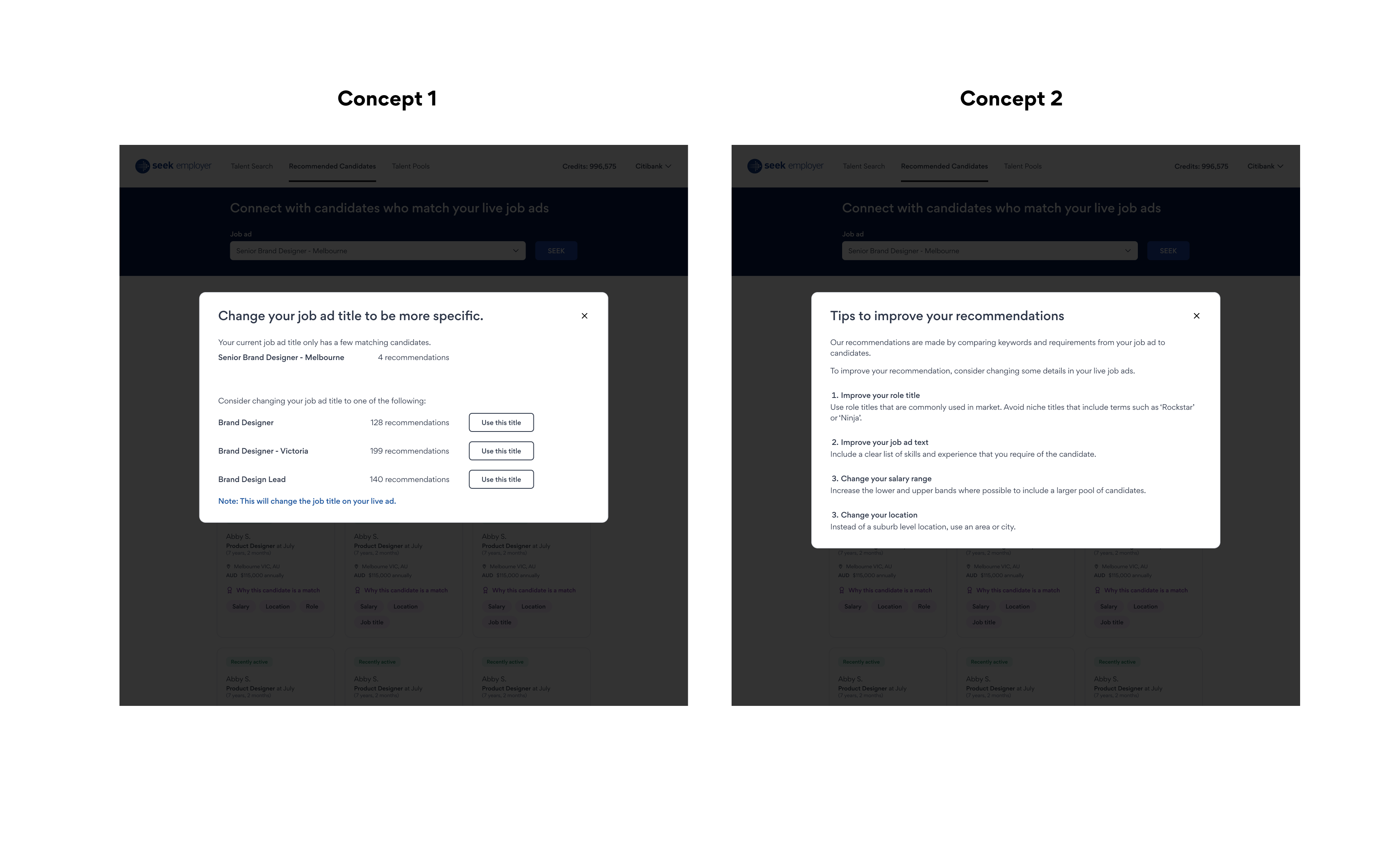
- Improved error states and messages for times when accurate recommendations cannot be provided.
The result
We conducted usability testing with 45 participants across the entire Asia Pacific region using both moderated and unmoderated sessions.
Testing showed 100% of users clearly understood the recommendations and confidently took the next step—either connecting with a candidate or refining their job ad to improve results.
We successfully designed a modular results page that functioned seamlessly across two distinct design systems, supporting the organisation’s transition to a new unified visual language.
These improvements led to a measurable reduction in time-to-action for key conversion activities, including:
- Retrieving candidate contact details
- Downloading resumes
- Sending job postings
By streamlining these touchpoints, we significantly increased user flow efficiency into revenue-generating actions. This acted as an early-stage conversion rate optimisation lever, helping us validate demand and inform future monetisation strategies as we scaled our product offering.
The highlight of the project:
Seek utilises a tool named Playroom to develop interactive prototypes using real code. The highlight for me was acquiring proficiency in this tool and coding over 1300 lines to visualise both our MVP and Ideal state designs, across various themes and screen sizes.
Take a look at how Playroom lets me view designs in different visual languages and for for different devices:


