.svg)


End-to-End Product Creation | Service Design & UX Strategy | Brand Identity & Visual Design | Human-Centred Research | Information Architecture & Flow Mapping | MVP & Ideal-State Design | Design System Creation & Management | Accessibility & Usability Testing | Roadmapping & Prioritisation
Context
As part of a Code for Australia fellowship, I partnered with Infoxchange—creators of Ask Izzy, a platform that connects Australians with housing, food, financial support, and other critical services.
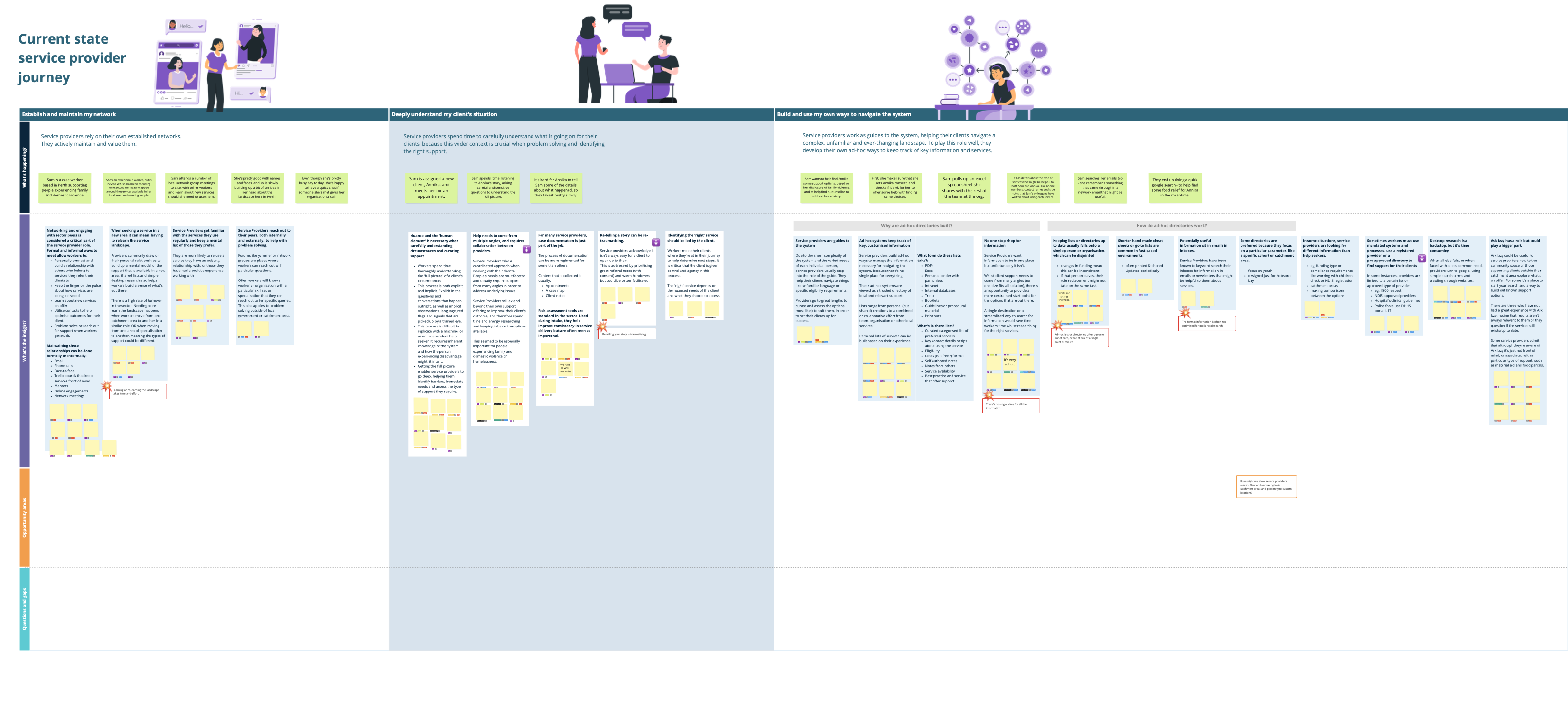
While Ask Izzy was originally designed for people in need, the team observed that many helpline workers, librarians, and social workers were also using the site to assist clients. These service providers were essentially “power users” working around the limitations of a tool not built for their needs.
Our goal: design a new product from scratch that empowered frontline workers to better support vulnerable people—without compromising the integrity or focus of the existing Ask Izzy platform.

The Challenge
These service providers and power users had unique workflows and responsibilities that Ask Izzy wasn’t built to support.
The team faced several design and strategy challenges:
- Unclear user journey fit: The original platform was optimised for individuals in crisis—not for workers supporting many clients across different needs.
- Missing functionality: Users couldn’t take notes, save services, or share results—creating inefficiencies and duplicated effort.
- Unfamiliar business model territory: The new platform needed to be financially sustainable in order to exist long term, in contrast to Ask Izzy’s donation-based model.
- Ambiguity in product direction: With no prior product for this segment, we were designing from a blank slate—strategically and structurally.
As the sole designer, I led everything from research and stakeholder facilitation to design system creation and beta testing—while also helping guide the product team toward long-term success.
Solution
I led the design of a brand-new digital platform specifically built for service providers. My work included:
- User Research & Co-Design: Interviewed a wide range of users, from youth workers to librarians. Worked closely with a Product Advisory Group made up of people with lived experience to ensure the solution was grounded in real-world needs.
- Information Architecture: Rebuilt the structure of the new site from scratch to align with how service providers think and work. Included and adapted how features flow to ensure they make sense for this new set of users.
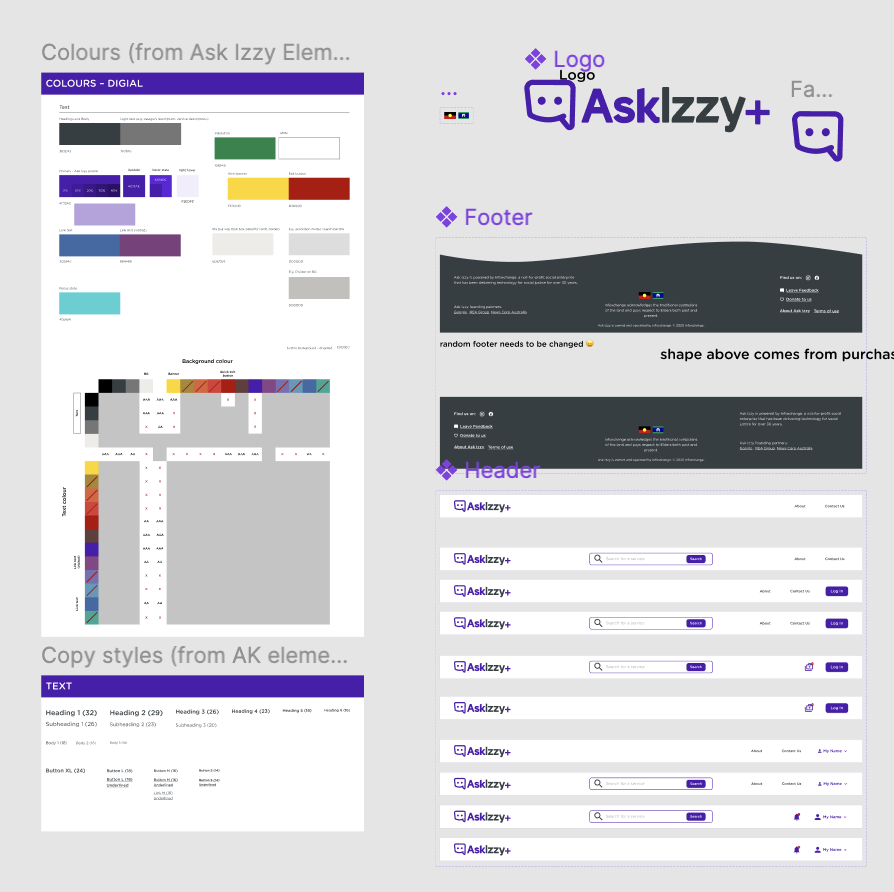
- Design System & Prototypes: Created a complete design system and produced both high-fidelity screens for developer handoff.
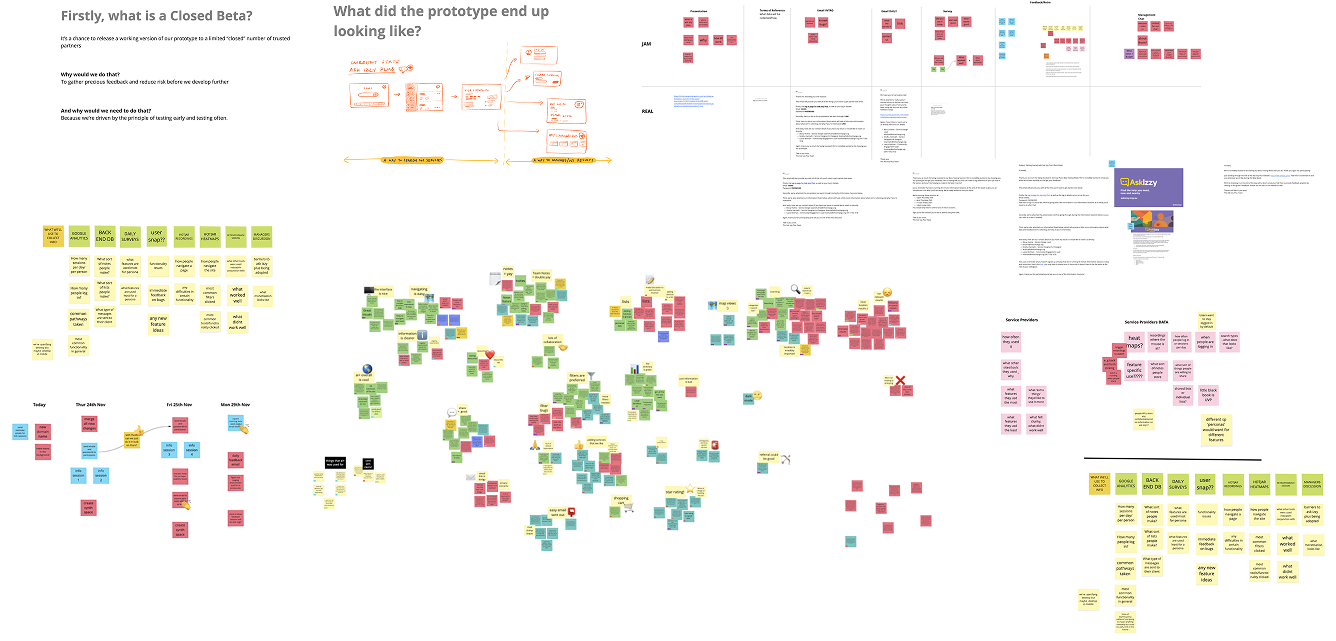
- Beta Testing & Feedback Loops: Recruited organisations for a 2 week beta test of the product in real contexts. Set up structured feedback channels, including in-app feedback widgets and follow-up workshops, to inform iterative improvements.
- Roadmap & Sustainability Strategy: Helped shape a growth roadmap and explored sustainable business models that could ensure product longevity without reliance on charitable donations.
1.png)
Result
The final product was a dedicated platform for service providers that:
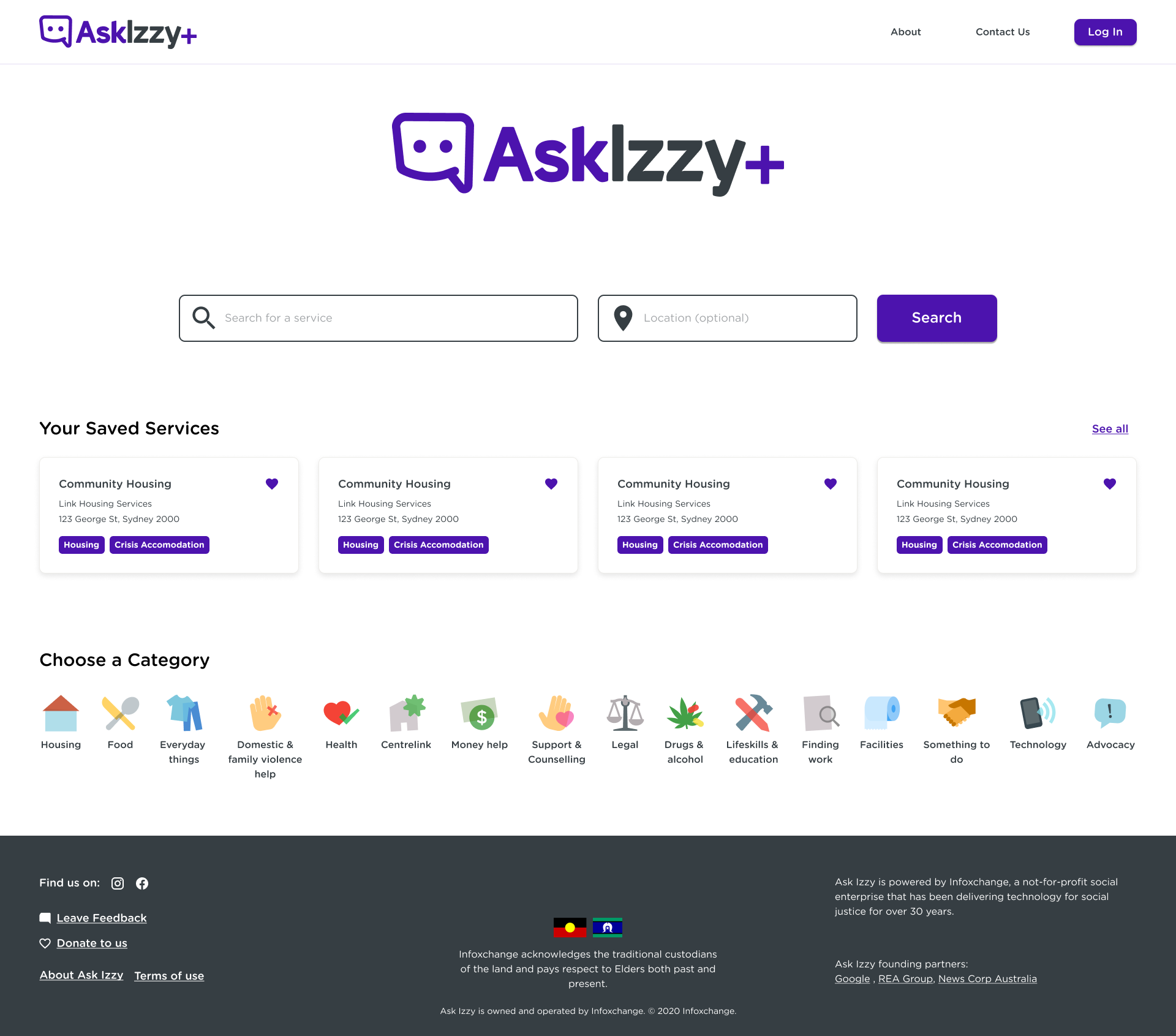
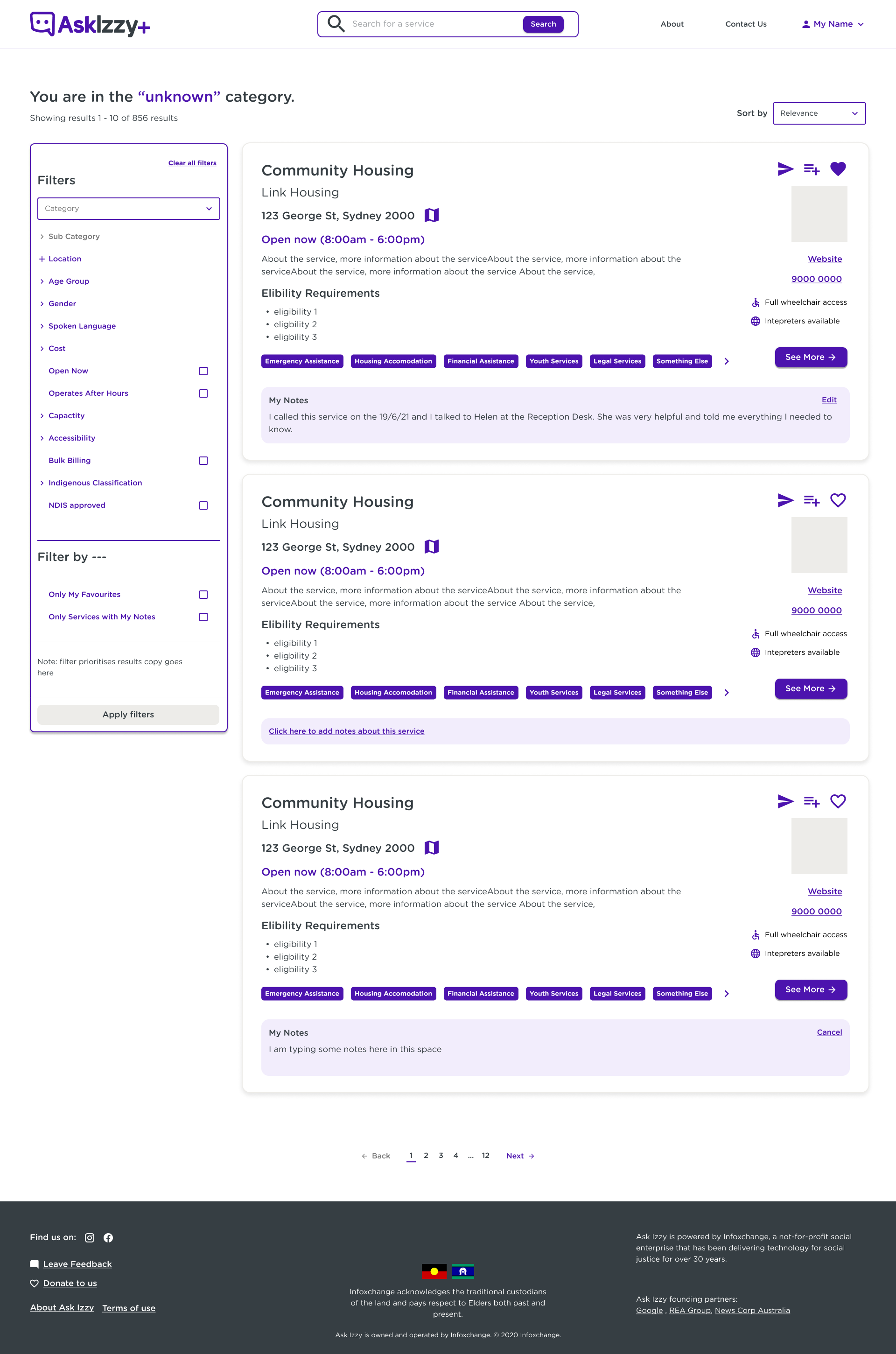
- Helped users search, filter, and save services faster
- Enabled note-taking, sharing, and client tracking to support day-to-day work
- Created a team centred site, allowing those within organisation to share notes and information on services they were referring, allowing for stronger pathways to help
- Provided analytics and reporting tools for organisations
- Was built to be mobile-first and accessible
- Was guided by a strategy for long-term sustainability
The platform complemented Ask Izzy while creating new value for a different, essential audience—frontline workers who play a critical role in service delivery across Australia.
The Most Interesting Thing I Worked On
The most rewarding part of this project was building a completely new product in close collaboration with people who had both lived experience and professional service experience. Their insights didn’t just shape the feature set—they changed how we thought about the responsibility and ethics of building a tool designed to assist people in moments of vulnerability.
Designing and running a full beta testing program, including onboarding partner organisations and designing feedback workflows, was another exciting challenge. It gave us real-world validation and strengthened the trust between Infoxchange and the community they serve.