
.svg)


End-to-End UX Ownership | Service Design & Blueprinting | User Research & Stakeholder Interviews | Cross-Council Collaboration | UX Strategy & Roadmapping | MVP & Ideal-State Design | Workshop Facilitation | Problem Framing | Design Tool Adoption & Enablement | Civic Tech Design
The Context
How might we design a scalable, real-time AI-powered solution that supports local councils in maintaining safer, smarter roads across NSW?
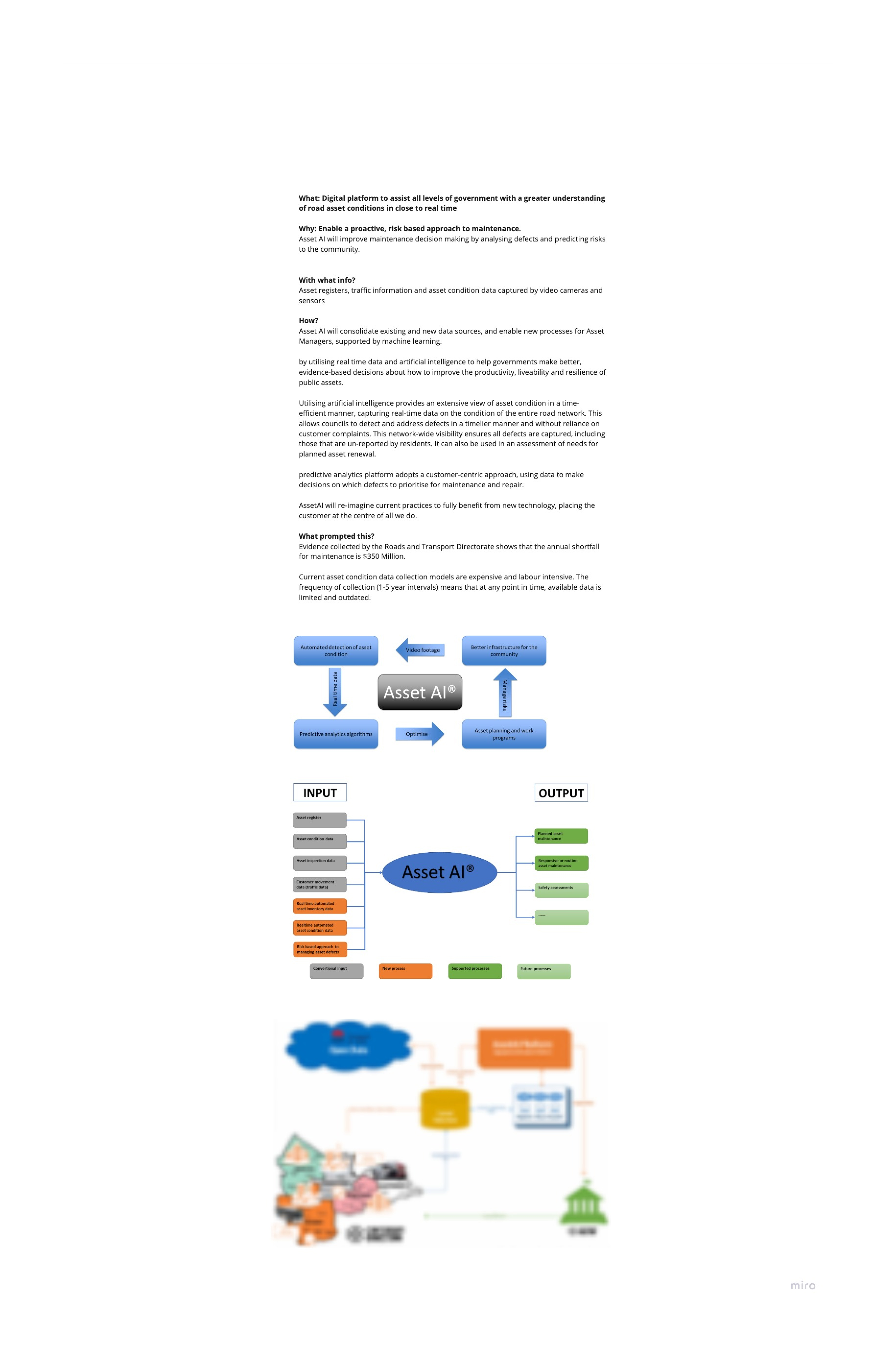
Asset AI® was a pioneering collaboration between Code for Australia, Transport for NSW, the IPWEA Roads and Transport Directorate, and several Australian councils.
The vision: a unified, intelligent system to monitor and improve road conditions using AI-powered insights and planning.
This product was envisioned to streamline asset management, enable proactive rather than reactive maintenance, and empower local governments with accessible, decision-ready information—something that had never been done before in Australia at this scale.
The Challenge
With no blueprint to follow, I was brought in as the sole designer to lead this complex, multi-stakeholder project. I needed to uncover user needs, define the problem space, and design a solution that worked across inconsistent systems, fragmented data sources, and varied council capabilities.
Some of the key challenges included:
- Significant ambiguity around scope and problem definition
- No consistent tools, standards, or workflows across councils
- Misaligned stakeholder expectations across government layers
- Minimal prior research, personas, or product frameworks to use
- Heavily compressed timelines with high pressure to deliver visible outcomes
- Acting as project communicator and council liaison—across 25+ councils
This wasn’t just about designing a UI. It was about building clarity, trust, and alignment across the entire project.
The Approach
Over six months, I led a full service design project that included:
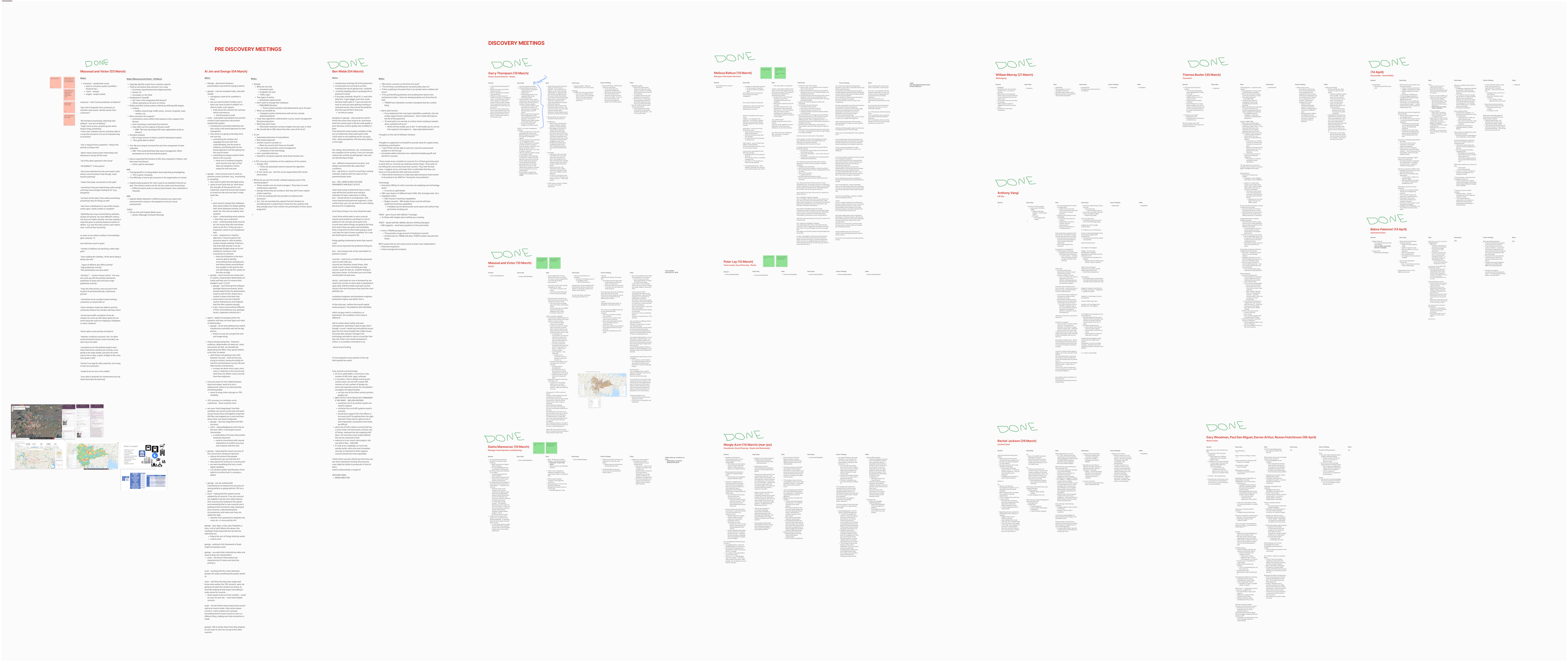
- Stakeholder interviews across Transport for NSW, IPWEA, and over 25 local councils
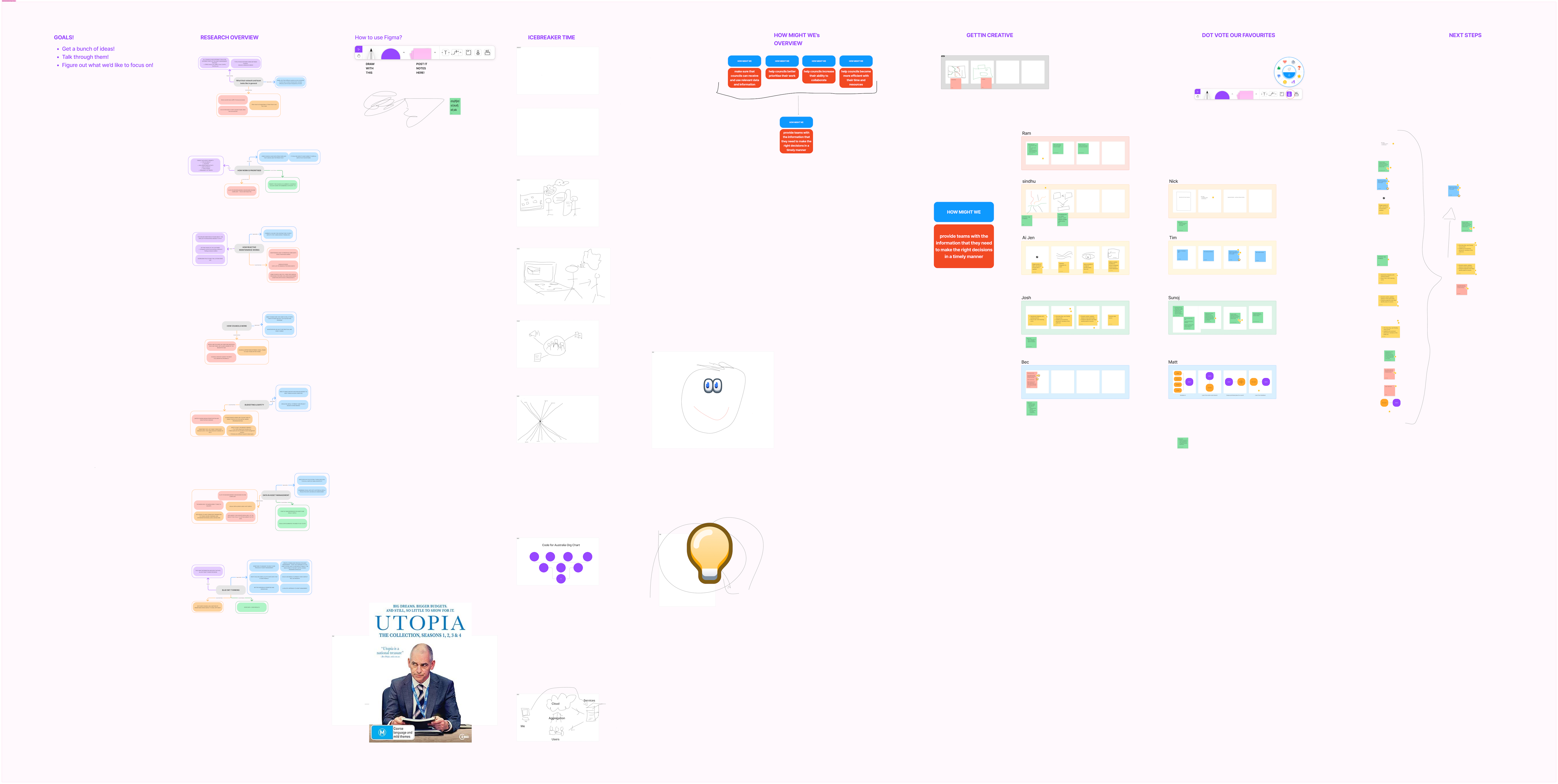
- Ideation workshopping across our larger project team - involving members from Transport for NSW, IPWEA and councils
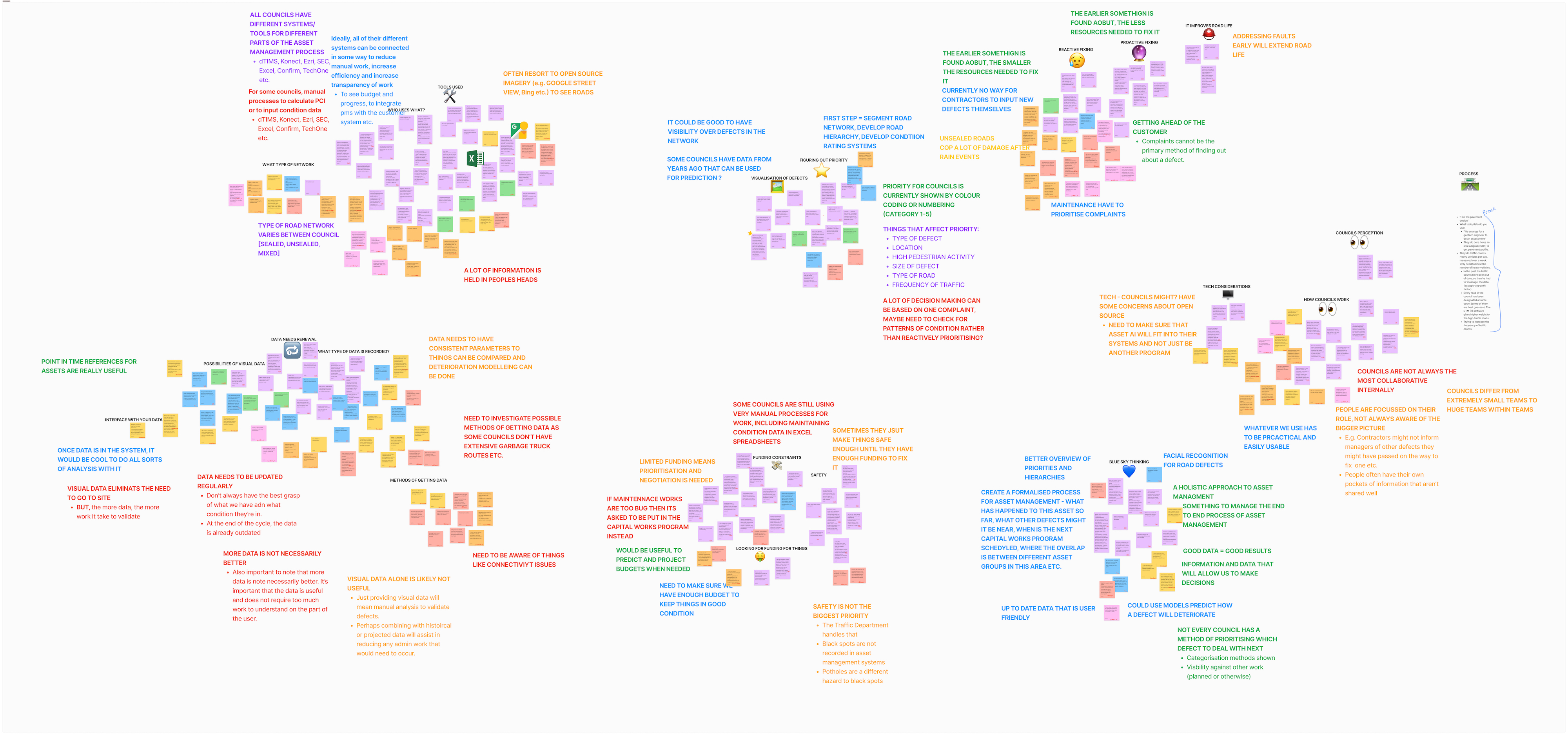
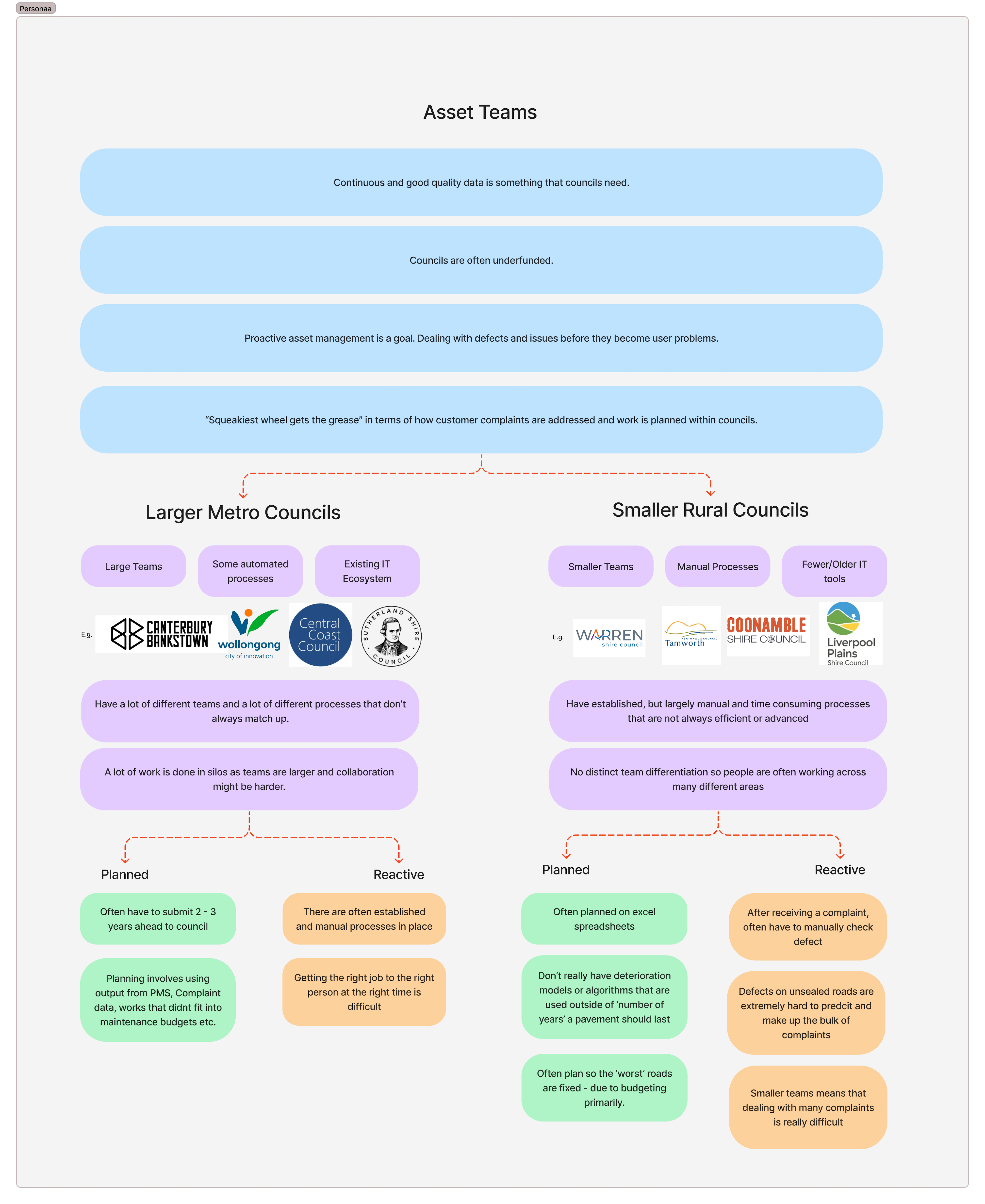
- A 3-week statewide research sprint involving said councils - uncovering processes, pain points, and hidden workarounds
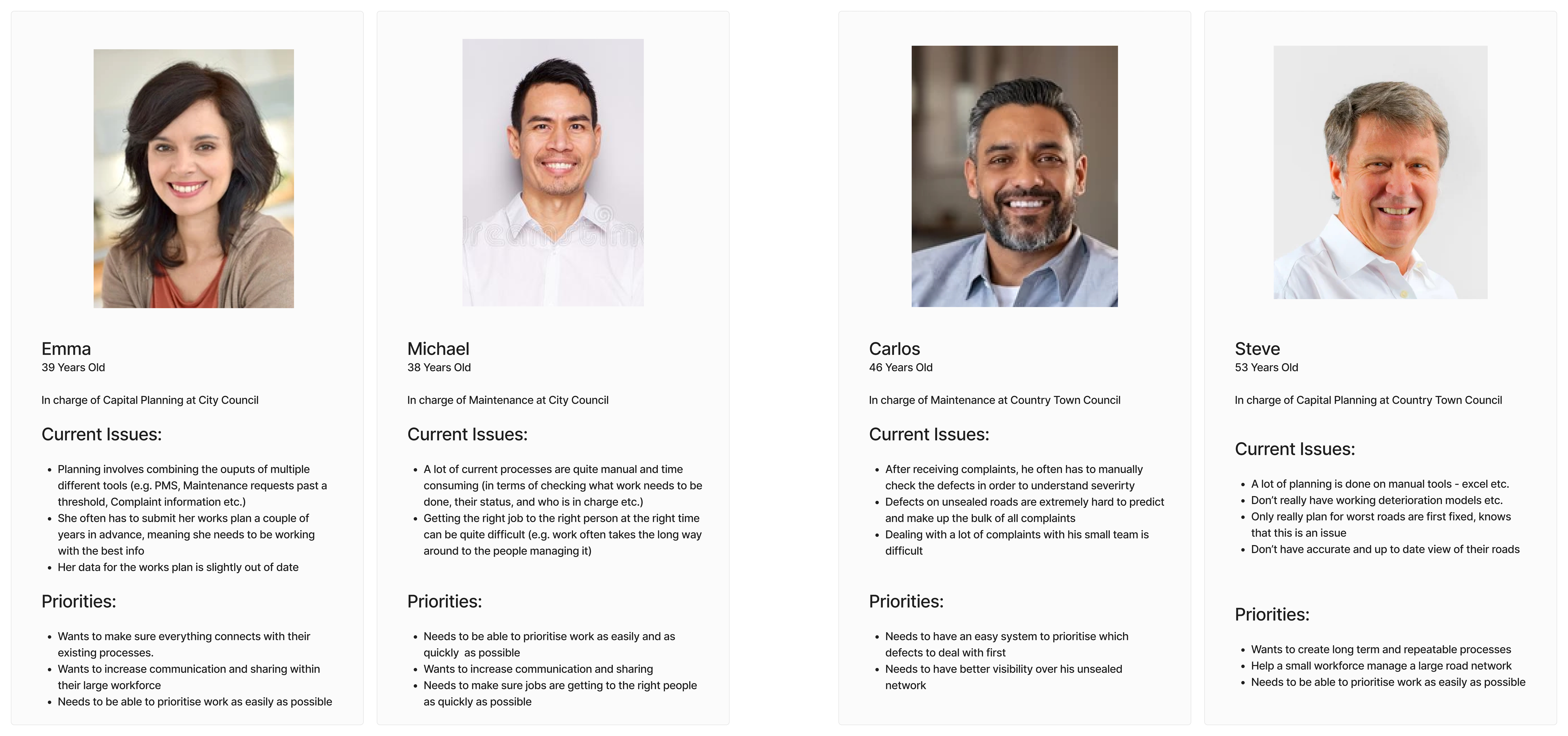
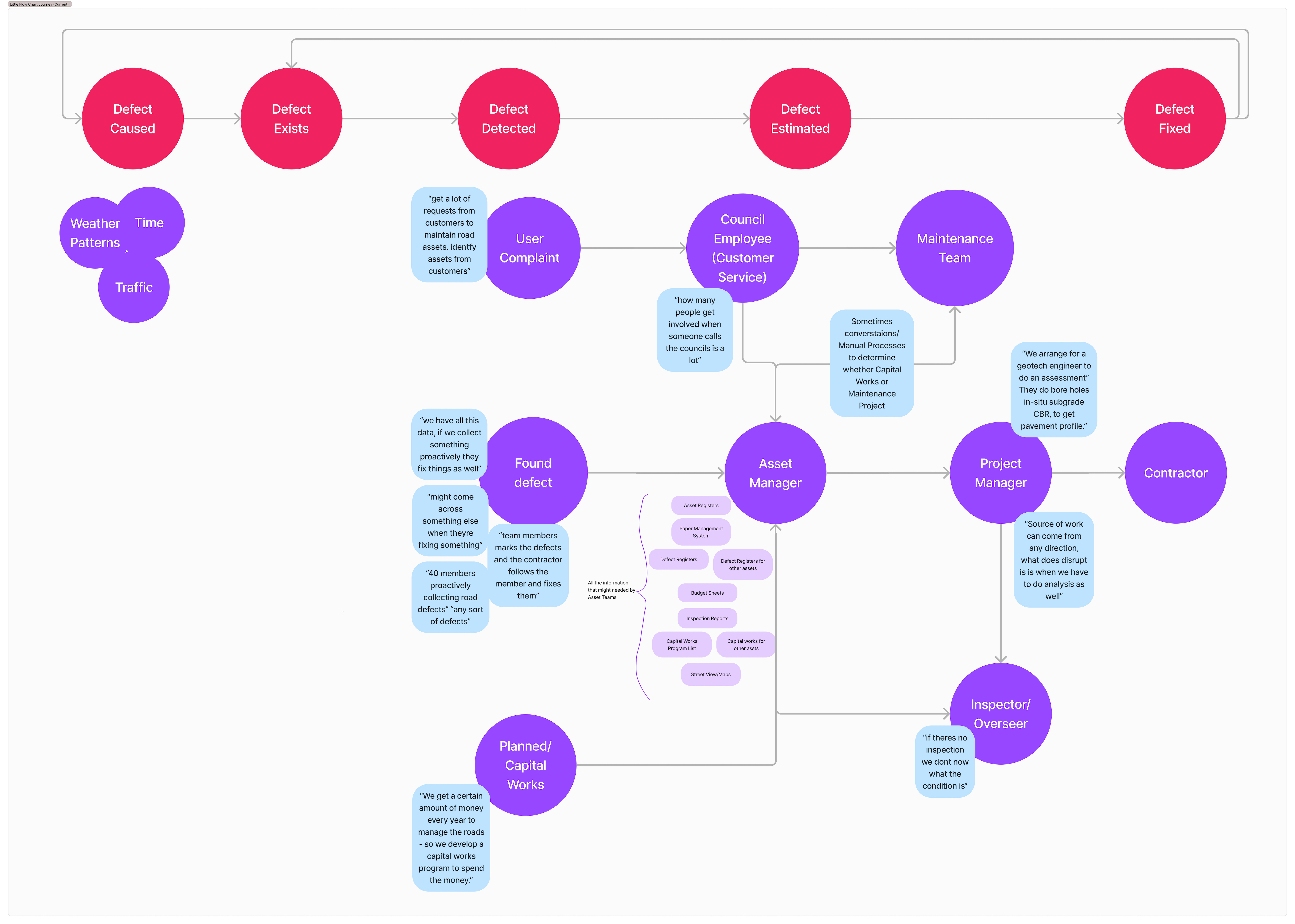
- Detailed personas and service blueprints capturing the roles and realities of operations managers, asset planners, and contractors
- Collaborative problem framing and MVP definition, aligned to future scalability
- Prototyping and validation of concepts that could unify data, deliver AI-driven insights, and integrate seamlessly into existing workflows
I also introduced FigJam as a live collaboration tool across the project, which significantly improved remote visibility, stakeholder engagement, and sprint planning.
The Outcome
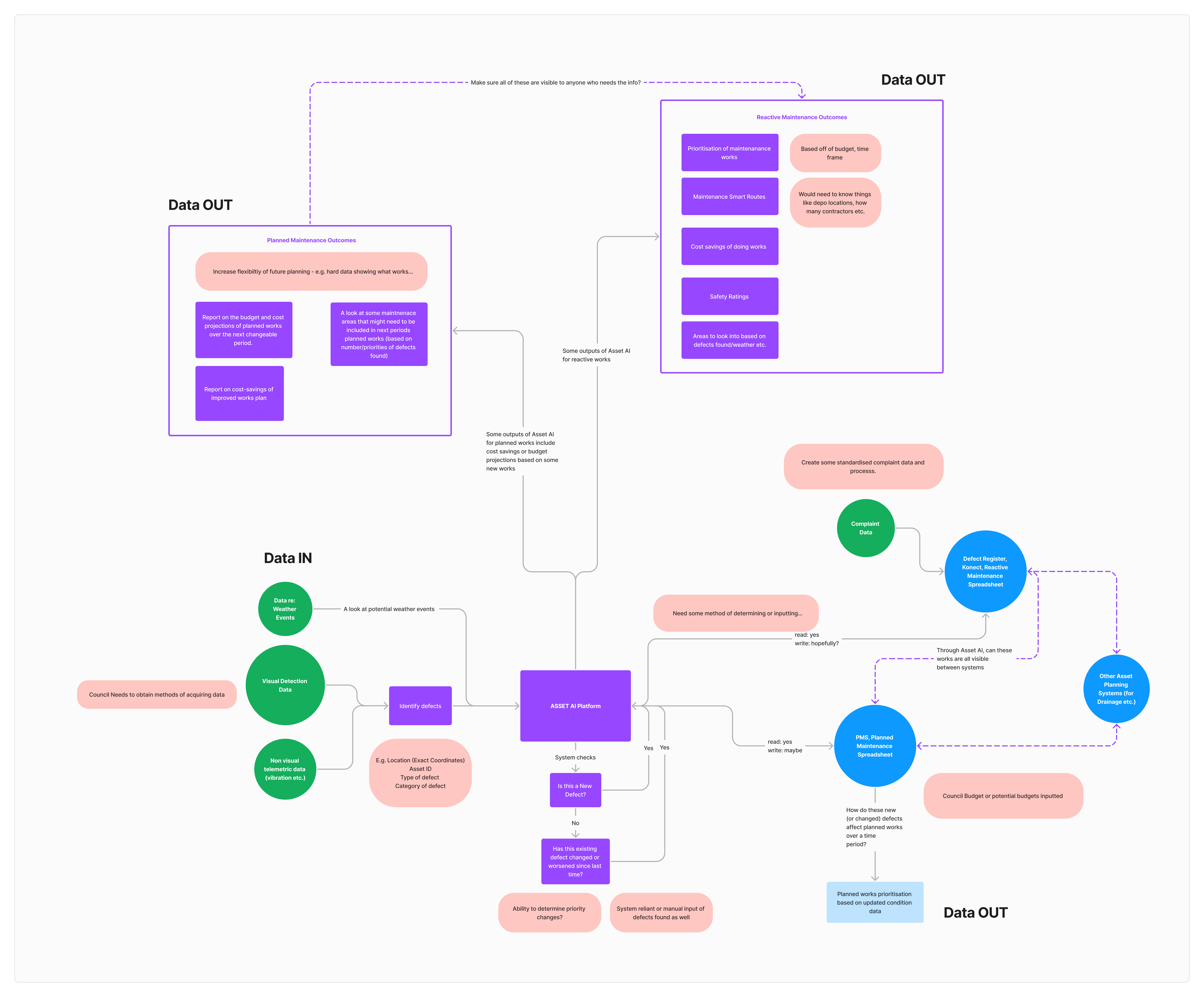
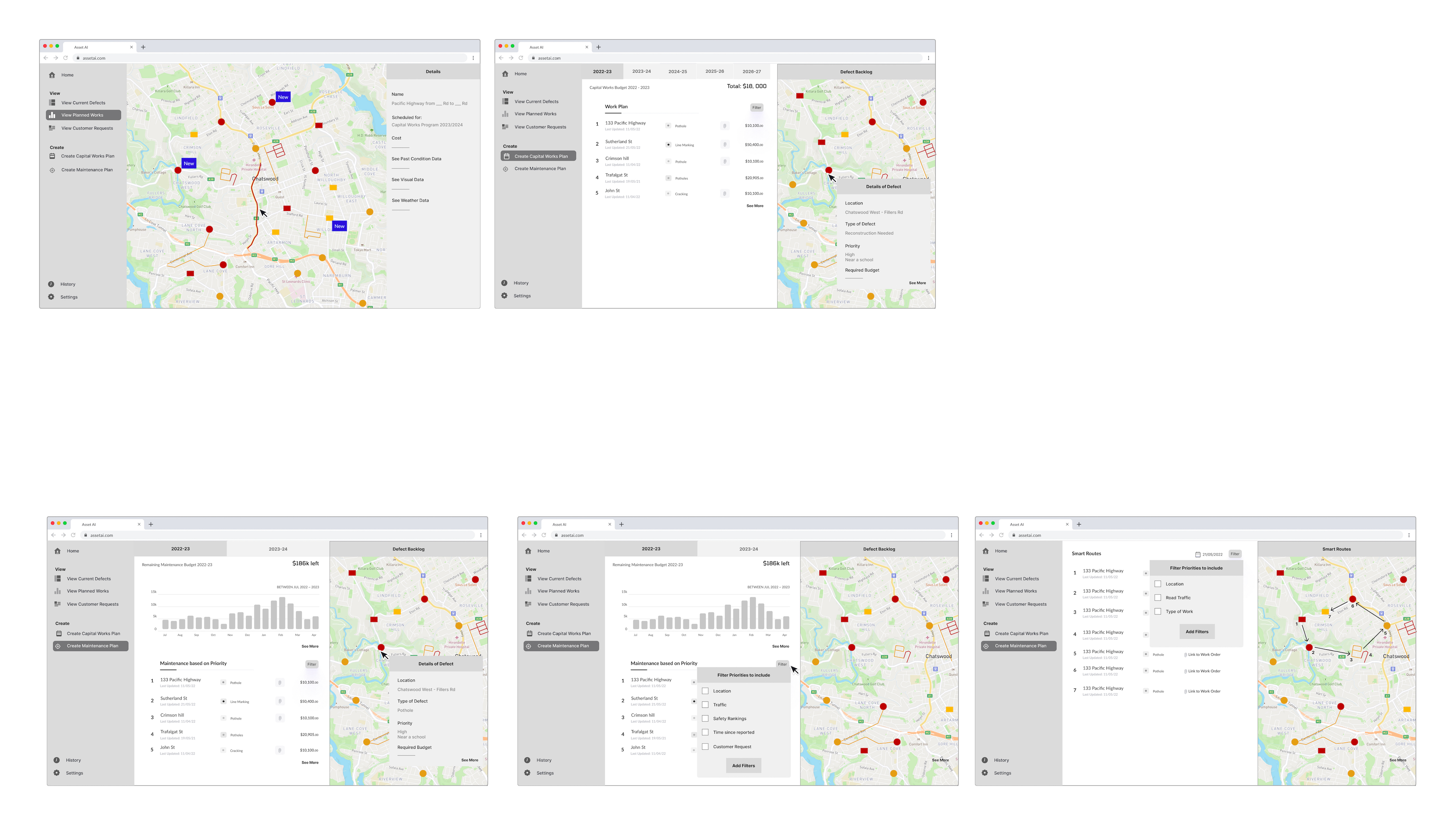
I designed a platform concept that would:
- Aggregate data from AI-powered defect detection, community complaints, council plans, and existing maintenance logs
- Recommend optimal actions based on safety risks, cost-efficiency, and long-term impact
- Enable councils to prioritise intelligently, plan smart maintenance routes, and make budget-informed decisions
- Provide live, shared visibility across teams, eliminating silos and improving strategic planning
The research and early designs I delivered were instrumental in shaping a 2-year product roadmap. They also helped secure buy-in from hesitant stakeholders and paved the way for future implementation phases across NSW councils.
The true impact of this work
- Engaging 25+ councils across Australia in just 3 weeks
- Delivering strategic research that unlocked long-term funding and multi-year roadmap
- Defining scalable service design patterns for future council-facing tools
- Setting a precedent for AI integration into government operations at the local level
- Leading all design work, research, and stakeholder alignment across multiple government levels


